

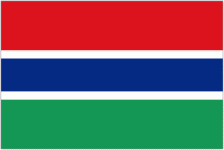
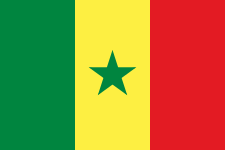
The Gambia national football team represents one of Africa's smallest nations — a narrow strip of land along the Gambia River on the West African coast, almost entirely surrounded by Senegal. Football has long been the dominant sport in the country, with a passionate grassroots culture supported by clubs based in and around the capital, Banjul.
For much of the team's existence, qualification for major tournaments remained elusive. The side competed regularly in CAF Africa Cup of Nations qualification campaigns but struggled to progress from the group stages. That changed dramatically in the early 2020s, when a generation of players — many developed through European club academies — transformed the team's fortunes. The Scorpions, as the team is widely known, qualified for their first-ever Africa Cup of Nations finals and announced themselves as a serious competitive force on the continental stage.
The national identity of Gambian football is shaped by its scale: a tiny nation punching above its weight through collective organisation and a diaspora of technically accomplished players. Matches against Senegal and other West African neighbours carry particular regional significance. The team's recent rise has given the country a source of considerable national pride, and the momentum built during that breakthrough period continues to define the side's ambitions heading into the current decade.
