

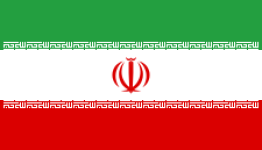

Iran's national football team traces its origins to the early twentieth century, when the sport itself was taking root across the country. The game arrived via British residents and sailors around the turn of the century, and by 1920 the Iranian Football Association had been founded to formalise and promote the game nationwide. The national team played its first recorded match on 25 August 1941, away against Afghanistan, with Hossein Sadaghiani — one of the sport's great early advocates — serving as head coach.
The team's most celebrated era came in the 1960s and 1970s, when Iran established itself as the dominant force in Asian football. The squad won the AFC Asian Cup in 1968, 1972 and 1976, becoming the only nation to claim the tournament three consecutive times. The side also qualified for four Olympic Games between 1964 and 1980, and in 1978 reached its first FIFA World Cup, held in Argentina.
After a difficult period during the 1980s — when the Iran–Iraq War disrupted football development and caused Iran to withdraw from World Cup qualifying — the team returned to the global stage at the 1998 FIFA World Cup in France, recording a landmark 2–1 victory over the United States. Iran has since qualified for the 2006, 2014, 2018 and 2022 World Cups, though the team has yet to advance beyond the group stage in any of those appearances.
The women's national team, nicknamed the Lionesses, has faced significant structural and political challenges but has grown in profile in recent years. Iran's footballing identity is shaped by its deep passion for the game at every level of society, from local streets to the vast Azadi Stadium in Tehran.

