The Lebanon national football team traces its origins to 22 March 1933, when representatives of thirteen clubs gathered in the Minet El Hosn district of Beirut to establish the Lebanese Football Association (LFA). The LFA joined FIFA in 1936, and Lebanon played their first officially recognised international on 27 April 1940, a 5–1 defeat to Mandatory Palestine — a match in which Camille Cordahi scored the country's first FIFA-recognised goal.
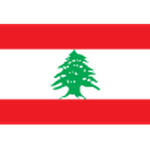
Known as "the Cedars" — a reference to the cedar tree that is Lebanon's national symbol — the side wears red at home and white away, mirroring the national flag. Early decades brought regional engagement: Lebanon finished third as hosts of the inaugural Arab Cup in 1963 and claimed third place at the Arab Games twice on home soil (1957 and 1997). The 11–1 victory over the Philippines in the 1968 Olympic qualifiers remains the team's largest ever winning margin.
International progress has been gradual. Lebanon qualified for the AFC Asian Cup for the first time in 2000 as hosts, and have since qualified twice more. A landmark moment came in November 2011 when Lebanon defeated South Korea 2–1 at home, reaching the final round of 2014 World Cup qualifying for the first time. At the 2019 Asian Cup, the Cedars came agonisingly close to reaching the knockout stage but were eliminated by Vietnam on the fair play tiebreaker.
A 16-game unbeaten run between March 2016 and September 2018 lifted the team to a peak FIFA ranking of 77th — their highest on record. Lebanon continue to compete in the WAFF Championship and Arab Cup alongside their World Cup and Asian Cup campaigns.
