

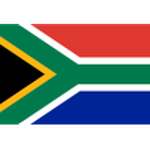



The South Africa national football team, nicknamed Bafana Bafana — meaning "The Boys" in Zulu — traces its organised roots to the late nineteenth century, when football arrived through British colonial influence. The all-white Football Association of South Africa was formed in 1892, though the sport quickly fractured along the racial lines imposed by apartheid, spawning multiple parallel associations for Black, Indian, and mixed-race South Africans. This segregation ultimately led to South Africa's expulsion from CAF in 1958 and formal suspension from FIFA in 1961, with full expulsion following the Soweto uprising in 1976.
A unified, multi-racial South African Football Association was established in 1991 as apartheid collapsed, and South Africa returned to international football on 7 July 1992 with a 1–0 victory over Cameroon in Durban. The decade that followed was the team's golden era. In 1996, just five years after readmission, South Africa hosted and won the Africa Cup of Nations — their greatest achievement to date. They reached the AFCON final again in 1998 and qualified for the FIFA World Cup for the first time that same year, competing in France. A second World Cup appearance followed in 2002, where they defeated Slovenia before an agonising group-stage exit.
The team's most high-profile moment came in 2010, when South Africa became the first African nation to host the FIFA World Cup. Despite a famous Siphiwe Tshabalala strike against Mexico in the opening match, they exited in the group stage — the first host nation to do so. In the current decade, South Africa have qualified for the 2026 FIFA World Cup, marking their first qualification in over two decades. Bafana Bafana are recognised by their traditional yellow-and-green kits and remain one of the most historically significant national sides on the African continent.

