

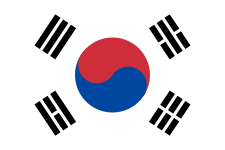




The South Korea national football team, governed by the Korea Football Association (KFA), made its international debut in 1948 at the Summer Olympics in London, defeating Mexico 5–3. The KFA was founded that same year following the establishment of the South Korean state, and the team joined FIFA shortly thereafter. Their first FIFA World Cup appearance came in 1954 in Switzerland, making South Korea only the second Asian nation ever to compete at the tournament.
The team's earliest continental success came quickly: South Korea won the inaugural AFC Asian Cup in 1956 and retained the title as hosts in 1960. They have been runners-up at the tournament on four further occasions, though a second Asian Cup title has eluded them — a drought some supporters attribute colourfully to the so-called "curse of the fake gold medals" from 1960.
The defining chapter in the team's history arrived at the 2002 FIFA World Cup, co-hosted with Japan. Under Dutch coach Guus Hiddink, South Korea became the first — and to this day only — Asian side to reach the semi-finals of a World Cup, defeating Poland, Portugal, Italy, and Spain along the way before finishing fourth. Captain Hong Myung-bo was awarded the Bronze Ball, the first Asian player to receive the honour. That tournament transformed football's popularity in the country and cemented the passionate supporter movement known as the Red Devils.
South Korea has since qualified for ten consecutive World Cups — the most of any Asian nation — and advanced to the knockout rounds again in 2010 on foreign soil. Known as the Reds for their iconic crimson kit, they remain the benchmark for international football in Asia.

