

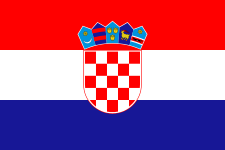
The Croatia national football team made its debut as an independent nation in 1990, following Croatia's declaration of independence from Yugoslavia, with FIFA and UEFA membership granted in 1992. Based in Zagreb, the team is administered by the Croatian Football Federation (Hrvatski nogometni savez, HNS).
Croatia announced itself on the world stage almost immediately. At the 1998 FIFA World Cup in France, in only their second tournament appearance, the team finished third — a remarkable achievement anchored by Davor Šuker's Golden Boot (six goals) and a squad brimming with technically gifted midfielders and forwards. That generation, featuring players such as Zvonimir Boban, Robert Prosinečki, and Šuker, established a style of technically refined, attacking football that the nation has sought to replicate ever since.
After a quieter period in the 2000s, Croatia re-emerged as a perennial contender. At the 2018 FIFA World Cup in Russia, the team made a historic run to the final — the first in the nation's history — before finishing as runners-up to France. Luka Modrić, the team's longtime captain, won the Golden Ball for best player of the tournament, a recognition that cemented his status as one of the finest midfielders of his generation. Four years later at the 2022 World Cup in Qatar, Croatia claimed third place once more, underlining the consistency of the program across decades.
The team's identity is inseparable from its passionate support and the red-and-white chequered kit — the šahovnica — which is one of the most recognisable uniforms in international football.

