

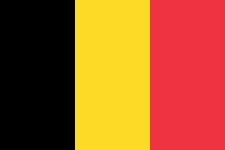


The Belgium national football team, representing one of Western Europe's founding football nations, traces its organised roots to the late nineteenth century, when the sport spread rapidly from England to the continent. Belgium was among the earliest adopters of association football in Europe, and its national association was established in 1895, making it one of the oldest football federations on the continent.
Belgium competed in some of the earliest editions of the Olympic football tournament and was a founding member of FIFA in 1904, reflecting the country's deep-rooted place in the global game. For much of the twentieth century, the team was a solid but rarely dominant force in international football, reaching the final of the 1980 UEFA European Championship, where they finished as runners-up, and claiming third place at the 1986 FIFA World Cup in Mexico — their strongest result of that era.
The defining chapter of Belgian football came in the 2010s and 2020s, when a generation of elite club players — developed through a reformed domestic academy system — transformed the national team into a consistent world-level force. This so-called 'golden generation' reached a peak FIFA world ranking of first place, achieved third place at the 2018 FIFA World Cup in Russia, and became regular contenders at every major tournament they entered.
Belgium's football identity is shaped by its bilingual, multicultural character — drawing players from Flemish, Walloon, and immigrant communities — and by the tension between individual brilliance and collective cohesion that has defined both its greatest moments and its most frustrating near-misses on the international stage.

