DR Congo at the World Cup 2026: Team Guide & 26-Man Squad
A team profile of DR Congo (Leopards), back at the FIFA World Cup after 52 years: 46th in the FIFA ranking, 2nd appearance (as Zaire in 1974), Sebastien Desabre's tactics, the intercontinental playoff story, players to watch like Yoane Wissa, and the Group K outlook with Portugal, Colombia and Uzbekistan.
·5 min read·Kickoff Calendar Editorial
PRO
Follow everything you care about.
Follow as many teams and players as you like — every match you care about, synced to your calendar.
Cape Verde at the World Cup 2026: Team Guide & 26-Man Squad
A team profile of Cape Verde (Blue Sharks), who reached a first-ever FIFA World Cup: 68th in the FIFA ranking, a half-million-population island nation's historic feat, coach Bubista, players to watch like Jamiro Monteiro, and the Group H challenge against Spain, Uruguay and Saudi Arabia.
Uruguay at the World Cup 2026: Team Guide & 26-Man Squad
A team profile of Uruguay (La Celeste) at the FIFA World Cup 2026: 17th in the FIFA ranking, 15th appearance, two-time champions (1930, 1950), Marcelo Bielsa's tactics, players to watch like Federico Valverde, and the Group H outlook with Spain, Saudi Arabia and Cape Verde.
News
Arsenal Are Premier League Champions: Ending a 22-Year Wait
Arsenal are 2025-26 Premier League champions — their first title in 22 years. How Mikel Arteta's side clinched it, the players behind it, and what comes next, including the Champions League final.
After 52 years, the Leopards are back on the World Cup stage. DR Congo last appeared in 1974, then as Zaire, and the long road back makes this one of the most emotional stories of FIFA World Cup 2026. Here is the full team guide: the history, the style, the players to watch, and why Group K could feel the force of a nation returning to the world.
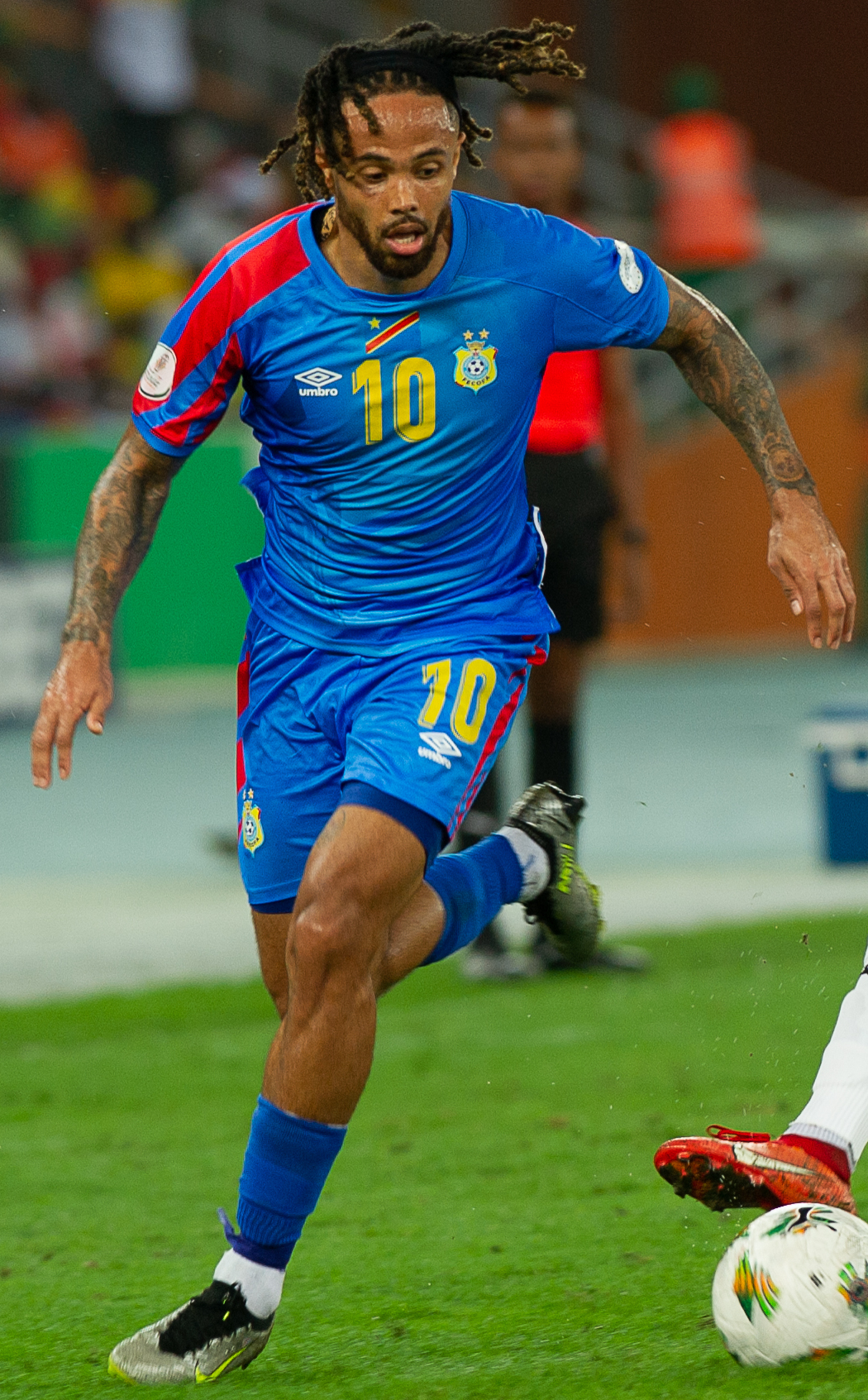
Theo Bongonda in the DR Congo national team shirt at the 2024 Africa Cup of Nationsfeguifoot
Key facts
FIFA ranking: 46th (2026)
World Cup appearances: 2nd (first since 1974, when they competed as Zaire)
Best result: Group stage (1974)
Head coach: Sebastien Desabre
Qualified: Finished second in their African qualifying group, came through the CAF play-offs, then beat Jamaica 1-0 after extra time in the inter-confederation play-offs to reach the finals
Group: Group K (with Portugal, Colombia and Uzbekistan)
History and the road so far
For DR Congo, everything starts with 1974. Back then the country competed as Zaire and became the first sub-Saharan African side to reach a World Cup. The campaign ended in the group stage, but its meaning was bigger than three matches: it put a powerful African football nation onto the global map.
That team came from real continental pedigree. The Leopards won the Africa Cup of Nations in 1968, then lifted it again in 1974 before travelling to the World Cup. This is not a nation arriving without history. DR Congo are a traditional African force that has been waiting, building and fighting for its return.
Then came the long gap. Different generations tried, the country changed names, and the World Cup stayed just out of reach. But the player pool kept growing, especially with more Europe-based talent carrying experience from high-level football. Now, in 2026, the wait is over. After 52 years away, the Leopards are back, and that comeback is the heartbeat of their tournament.
Style of play
Under Sebastien Desabre, DR Congo bring physical power, direct running and serious individual threat in the final third. They can suffer without the ball, compete hard in duels, then break forward quickly once possession turns over. One vertical pass, one set piece, one burst from a forward runner can change the mood of a match.
This side is not built to calmly dominate every opponent for 90 minutes. It is built to bite. There is leadership in the back line, pace and finishing up front, and enough European experience across the squad to handle difficult tournament moments. Against stronger teams, DR Congo's route is clear: stay alive, make the game uncomfortable, and attack the spaces when they appear.
Players to watch
Yoane Wissa is the headline forward, an explosive attacker shaped by the intensity of the Premier League. His runs, movement and finishing give DR Congo the kind of cutting edge that can punish even elite defenses.
Cedric Bakambu brings experience and calm to the front line. In a tournament where chances can be scarce, his timing and composure in the box could be priceless.
Chancel Mbemba is the defensive pillar and a captain-level presence. Strong in duels, commanding in the air and vocal in organizing the back line, he is central to how far the Leopards can go.
Group K outlook
DR Congo open against Portugal on 17 June, face Colombia on 23 June, and close against Uzbekistan on 27 June.
Portugal — the group favorites. Their attacking quality makes the opener a huge test straight away.
Colombia — a dangerous South American side with technique, rhythm and tournament edge. Matching their midfield intensity will be crucial.
Uzbekistan — a World Cup debutant with momentum and ambition. For DR Congo, this is the match that could decide whether the comeback story continues into the knockouts.
Portugal and Colombia will be viewed as the leading names in Group K, but DR Congo are not here to make up the numbers. If they stay compact, turn duels into momentum and let their forwards attack space, they can make this group messy in a hurry. The dream is simple and thrilling: survive the opener, stay alive against Colombia, and take a shot at history in the final match.
Watching from Japan and your calendar
Because the tournament is in North America, DR Congo's matches land late at night or early in the morning for viewers in Japan. The Portugal opener is scheduled for 2:00 a.m. JST on 18 June. To avoid missing the Leopards' first World Cup match in 52 years, subscribe to every DR Congo fixture in your calendar.
The 26-Man Squad
Under Sebastien Desabre, the 26 players below were named (likely shape: Athletic 4-3-3 / 4-2-3-1).
Players to watch: Yoane Wissa, Chancel Mbemba, Aaron Wan-Bissaka.
Q. How many times has DR Congo reached the World Cup?
This is their 2nd appearance. Their previous World Cup was in 1974, when they competed as Zaire, so 2026 marks a 52-year return.
Q. Who are DR Congo's group opponents?
Group K: Portugal, Colombia and Uzbekistan. DR Congo open against Portugal on 17 June.
Q. What is DR Congo's best World Cup result?
The group stage, reached in 1974. In 2026, they are chasing their first-ever place beyond the group phase.
Q. Who is the head coach?
Sebastien Desabre. He has led the team since 2022 and guided DR Congo through African qualifying, the CAF play-offs and the inter-confederation play-off route back to the World Cup.