PSG Retain the Champions League: Beating Arsenal on Penalties in Budapest
Paris Saint-Germain beat Arsenal on penalties (1-1 aet, 4-3) in the 2026 Champions League final to go back-to-back. The goals, the shootout, Vitinha's MOTM, Arteta's reaction, what it means, and how Japan watched it.
·6 min read·Kickoff Calendar Editorial
PRO
Follow everything you care about.
Follow as many teams and players as you like — every match you care about, synced to your calendar.
Japan's World Cup 2026 guide covers Group F against the Netherlands, Tunisia and Sweden, plus Samurai Blue tactics, key roles and the quarterfinal target.
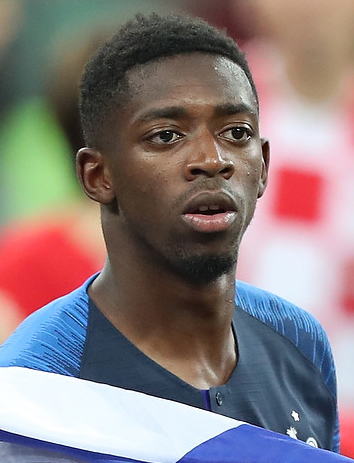
Ousmane Dembélé, the reigning Ballon d'Or holder, whose second-half penalty drew PSG level in Budapest.出典: Wikipedia / CC BY-SA 3.0
Paris Saint-Germain are European champions again. On 30 May 2026, at the Puskás Aréna in Budapest, Luis Enrique's side drew 1-1 with Arsenal after extra time and won the shootout 4-3, retaining the UEFA Champions League trophy they had won in 2024-25.
For PSG, this was more than a final won. It was the club's second Champions League title, its first successful defence, and a place on a very short list. Since the competition was rebranded in 1992-93, only Real Madrid had previously retained the trophy, three years running from 2016 to 2018. PSG are now the second club of the Champions League era to go back-to-back.
For Arsenal, it was a different kind of history. Mikel Arteta's team arrived in Hungary as the newly crowned 2025-26 Premier League champions, ending a 22-year wait for the league title, and playing the first European Cup or Champions League final in the club's 140-year history. A historic double was within reach. Instead, after 120 minutes of superb defensive structure and one decisive missed fifth penalty, the night became a painful near-miss.
The attendance was around 61,035. Daniel Siebert of Germany refereed. In Japan, the match kicked off at 1:00 a.m. JST on 31 May and stretched all the way into penalties.
Havertz Strikes Early, PSG Search for Their Edge
Arsenal's route to Budapest made the final feel earned rather than accidental. They came through the league phase unbeaten, then passed Bayer Leverkusen, Sporting CP and Atlético Madrid in the knockouts. PSG's path was no lighter: top of the league phase, past Monaco in the play-off, Chelsea in the round of 16, Liverpool in the quarter-finals and Bayern Munich in the semi-finals.
The opening twist arrived almost immediately. In the sixth minute, Kai Havertz put Arsenal in front, lashing a rising shot past PSG goalkeeper Matvey Safonov. Arsenal had the goal, the defensive base, and the emotional clarity of a team that knew the shape of its own game.
PSG still dominated possession. That, in itself, was not unusual. What was unusual was the texture of their attacking work. The ball was theirs for long spells, yet the final third lacked its usual sharpness. Arsenal's defending was compact, disciplined and sustained for the full distance, forcing PSG into a match of patience and control rather than acceleration.
Ousmane Dembélé, the reigning Ballon d'Or holder, eventually pulled PSG level from the spot. The penalty came in the 65th minute, after Khvicha Kvaratskhelia was fouled by Cristhian Mosquera. Dembélé sent David Raya the wrong way for his 20th goal of the season.
That goal did not transform PSG into their most fluent selves, but it restored the match to the territory they could manage: possession, circulation and pressure without panic. Kvaratskhelia had begun to surge more forcefully in the second half, and his penalty-winning run gave PSG the route back that their open play had not quite provided.
The Extra-Time Flashpoint
The match finished 1-1 after 90 minutes, and it stayed there after 120. Extra time was tight and increasingly nervous, with Arsenal still defending with conviction and PSG still unable to make their territorial control feel decisive.
The flashpoint came when Arsenal substitute Noni Madueke went down under Nuno Mendes. Siebert waved away the penalty appeal. Arsenal felt it should have been given, and the incident became one of the post-match reference points of the night.
Arteta told TNT Sports: "It is very tough to accept. When you are so consistent in the competition all the way to the final and in the end you lose the trophy on penalty kicks. It is a difficult one."
On the Madueke incident, he added: "I watched it back. It can easily be a penalty."
Declan Rice felt it was very similar to a penalty Arsenal had been awarded against Bayer Leverkusen earlier in the competition. That comparison mattered, because Arsenal did not leave Budapest feeling outclassed. They left feeling they had taken PSG to the line and been denied one possible path to settling the final before the shootout.
The Shootout: Five PSG Kicks, One Arsenal Collapse Point
The penalties were cleanly brutal.
Gonçalo Ramos scored first for PSG. Viktor Gyökeres answered for Arsenal. Désiré Doué then scored, before Eberechi Eze missed. Nuno Mendes missed for PSG, reopening the door. Rice scored for Arsenal, restoring belief. Achraf Hakimi scored. Gabriel Martinelli scored. Lucas Beraldo converted PSG's fifth.
Then came Gabriel Magalhães, taking Arsenal's fifth. His kick went over the bar. PSG had won the shootout 4-3.
There was no elaborate tactical explanation for that final act. Shootouts compress a season, a campaign and a night into seconds. Arsenal had carried the final to the edge. PSG had one more made kick in them.
Vitinha's Final: Control Over Flourish
If the final had a defining PSG player, it was Vitinha. He was named man of the match, and the choice suited the character of PSG's victory. This was not a night of attacking excess, nor PSG at their most cutting. It was a final won through control, recovery and the ability to keep a structure alive even when Arsenal had disrupted the usual rhythm.
Vitinha controlled the game. Around him, PSG had just enough from the players who bent the match in decisive moments: Kvaratskhelia winning the penalty and driving harder after half-time, Doué creating chances and then slotting his shootout penalty calmly, Hakimi among the best-rated players at 8/10, and Dembélé providing the equaliser that kept PSG's defence of the trophy alive.
That is why the French framing landed so naturally. L'Équipe called this PSG side "legendary," praising the way they recovered after being "suffocated and dominated" by Arsenal early on. The language matched the achievement. PSG did not simply win another final. They retained the trophy, claimed the club's second Champions League title, and qualified for the 2026 UEFA Super Cup.
There is a difference between brilliance and authority. PSG were not brilliant in every attacking sequence in Budapest. They were authoritative enough to endure a bad start, absorb Arsenal's best defensive version, and still leave with the trophy.
Arsenal's Double That Wasn't
For Arsenal, the hurt is sharpened by the scale of what was available. This was already a title-winning season. Arteta's side had just been crowned Premier League champions, ending a 22-year wait. They had gone unbeaten through the Champions League league phase and reached the first European Cup or Champions League final in Arsenal history.
Then Havertz gave them the perfect start.
Havertz was among Arsenal's best players and was rated 8/10, not only for the goal but because his finish gave Arsenal a match script they could defend. Rice was dominant in midfield, winning the ball repeatedly and then scoring his penalty. Piero Hincapié was brave and played through an injury. William Saliba, Martin Ødegaard and the rest of Arsenal's structure held firm enough to force PSG into a long, uncomfortable final.
Bukayo Saka was part of an Arsenal side that came within a shootout of turning a first final into a first triumph. Instead, the story in England hardened quickly around pain and the penalty that was not given. The Sun led on Arsenal's "painful defeat" and the uncalled Madueke penalty.
Arteta did not hide from the emotional weight of the result. "I am so proud of them. It is a privilege to manage this group of players," he said.
Asked about Gabriel taking the fifth penalty, Arteta said: "He wanted to take the fifth penalty. We have prepared and trained this moment."
That is the cruelty of the final. Arsenal's preparation carried them through the league phase unbeaten, through three knockout ties, through the pressure of Budapest, and through 120 minutes against the defending champions. It could not protect them from the last kick.
Watching the Final in Japan
For viewers in Japan, the final was shown live exclusively on WOWOW at 1:00 a.m. JST on 31 May. A delayed broadcast was available on Lemino. It was not on DAZN, which does not hold Champions League rights in Japan.
If you missed it live, those replay windows are the way to catch the full 120 minutes plus the shootout.
Follow the Champions
PSG's next European marker is the 2026 UEFA Super Cup. Arsenal's calendar turns from a historic domestic title and a painful European final toward the next campaign.